Laparoscopic Urology Surgery in Dhaka
Keyhole surgery for kidney, ureter, adrenal, and bladder conditions, planned around your diagnosis and overall health.
Dr. Humayun Kabir Kallol is a Consultant Urologist and Laparoscopic Surgeon at Continental Hospital PLC, Gulshan-2, Dhaka. He trained in general surgery before specialising in urology, and laparoscopy is a central part of his surgical work. As an experienced Urologist in Dhaka, he provides specialised care for patients with urological conditions and offers surgical treatment when needed.
- MBBS
- FCPS (Surgery)
- MS (Urology)
BM&DC Reg. No. A-45623
 Posted on Google

 Sajib Rana
Trustindex verifies that the original source of the review is Google.
আমার দেখা বেষ্ট একজন ডাক্তার। আমি নিজে অপারেশন করিয়েছি আলহামদুলিল্লাহ উনি খুব সুন্দরভাবে আমার অপারেশন করিয়ে দিয়েছে। সবথেকে বড় কথা পেশেন্টের সাথে উনার আন্ডারস্ট্যান্ডিং খুবই ভালো। আমার আম্মু, মামা আমার এক আঙ্কেলের অপারেশনে উনি নিজে করিয়েছে এবং খুব ভালো ভাবেই করেছে। আলহামদুলিল্লাহ এখন পর্যন্ত সব ঠিক আছে। সবকিছু মিলিয়ে আমার দেখা সবথেকে ভালো ইউরোলজিস্ট স্যার। ❤️Posted on Google TIPU SULTANমাশা আল্লাহ।Posted on Google
 Rubayet AminThis was my first experience with surgery, as I recently underwent a kidney stone removal procedure (PCNL) under Dr. Humayun Kabir Kallol at Continental Hospital. Naturally, I was a bit nervous, but Dr. Kallol made the entire experience much easier and more comfortable than I had expected. He is extremely knowledgeable, smart, friendly and approachable. What I appreciated most was his genuine care for his patients. He was always available on WhatsApp whenever I experienced any discomfort after the surgery, and he was even kind enough to call me personally to check on my recovery. It's rare to find a doctor who makes you feel this comfortable and cared for, not just during treatment but even after the procedure. I am truly grateful to him for making my first surgical experience a positive one. Highly recommended to anyone looking for a skilled and compassionate urologist.Posted on Google
 Golam MostofaExcellent 👌Posted on Google
 A K M Borhan ChowdhuryDr Humayun Kabir is clear communicator, patient, and truly cares about the outcome. He is very respectful of my time. Highly recommended!Posted on Google
 Mufasser SheikhDr. was really so kind & friendly. It was a free feeling after even very first visit.Posted on Google
 Mimucha MimHe is a very good doctor. When I talk to him, the patient recovers a lot. His operations are always successful. I have been taking treatment from him for many years. He is a very good doctor and a good person.Posted on Google
 Nazia SultanaDr. Humayun Kabir Kollol Sir is very professional, caring, and helpful. He performed my surgery with great care. I’m truly grateful for his treatment and support. Highly recommended!
What Is Laparoscopic Urology Surgery?
Laparoscopic urology surgery is a way of operating on the kidney, ureter, adrenal gland, bladder, or prostate through a few small cuts, usually 5 to 12 mm wide. A thin camera shows the inside of the body on a screen, and the surgeon works with long, narrow instruments. It is often called keyhole surgery.
During the operation, the abdomen is gently filled with carbon dioxide gas to create working space. The camera gives a magnified view, which helps with careful dissection and fine stitching.
Laparoscopy is not the same as endoscopic surgery. Endoscopic procedures pass through the urine passage and leave no cut on the skin. Laparoscopy is used when the surgeon needs to reach an organ from outside, through the abdomen or the side of the body.
Conditions That May Need Laparoscopic Surgery
Most urological problems do not need an operation. Laparoscopic surgery is usually considered when tests show a structural problem that medicine cannot correct, such as:
PUJ obstruction
A narrowing where the kidney joins the ureter, which makes the kidney swell (hydronephrosis)
A non-functioning kidney
A non-functioning kidney that causes repeated pain, infection, or raised blood pressure
Adrenal tumours
Adrenal tumours, especially those that produce excess hormones or are large
Kidney, bladder, or prostate cancer
Kidney, bladder, or prostate cancer that needs surgical removal
A damaged or narrowed ureter
A damaged or narrowed ureter that needs to be rejoined to the bladder
Urinary fistula
Urinary fistula, such as a vesicovaginal fistula after hysterectomy
Laparoscopic Procedures Dr. Kallol Performs
This page explains the non-cancer kidney and adrenal operations he performs laparoscopically. His cancer and reconstructive operations are also done this way, and each has its own page.
01
Laparoscopic Pyeloplasty for PUJ Obstruction
PUJ obstruction stops urine from draining freely out of the kidney. Over time, the kidney can stretch, cause flank pain, and slowly lose function.
In laparoscopic pyeloplasty, the narrowed segment is removed and the healthy ureter is stitched back to the kidney. A thin internal tube, called a DJ stent, is usually left in place for a few weeks while the join heals. It is then removed in a short day procedure.
The aim is to restore drainage and protect the kidney function that remains. A follow-up renogram shows how well the kidney drains after surgery.
02
Laparoscopic Simple Nephrectomy
A simple nephrectomy removes a kidney that has stopped working and keeps causing problems. Common reasons include long-standing obstruction, large neglected stones, and repeated infection.
Before advising removal, Dr. Kallol checks how much each kidney contributes to your total kidney function, usually with a DTPA renal scan. A kidney is removed only when keeping it offers no real benefit and it continues to cause harm.
Most people live a normal life with one healthy kidney. Regular blood pressure and kidney function checks are still advised.
03
Laparoscopic Adrenalectomy
The adrenal glands sit on top of each kidney. They make hormones that help control blood pressure, metabolism, and the body’s response to stress.
An adrenal tumour may need removal if it produces excess hormones, keeps growing, or is large. Hormone tests and imaging are completed first, and some patients need medicine to control blood pressure before the operation.
Dr. Kallol has shared a recorded laparoscopic adrenalectomy for a 9 cm adrenal mass on his YouTube channel.
04
Other Laparoscopic Urological Operations
Laparoscopy is also part of his cancer and reconstructive surgery:
- Radical and partial nephrectomy, radical prostatectomy, and radical cystectomy are explained on the urological cancer surgery
- Ureteric reimplantation and fistula repair are covered under reconstructive and female urology.
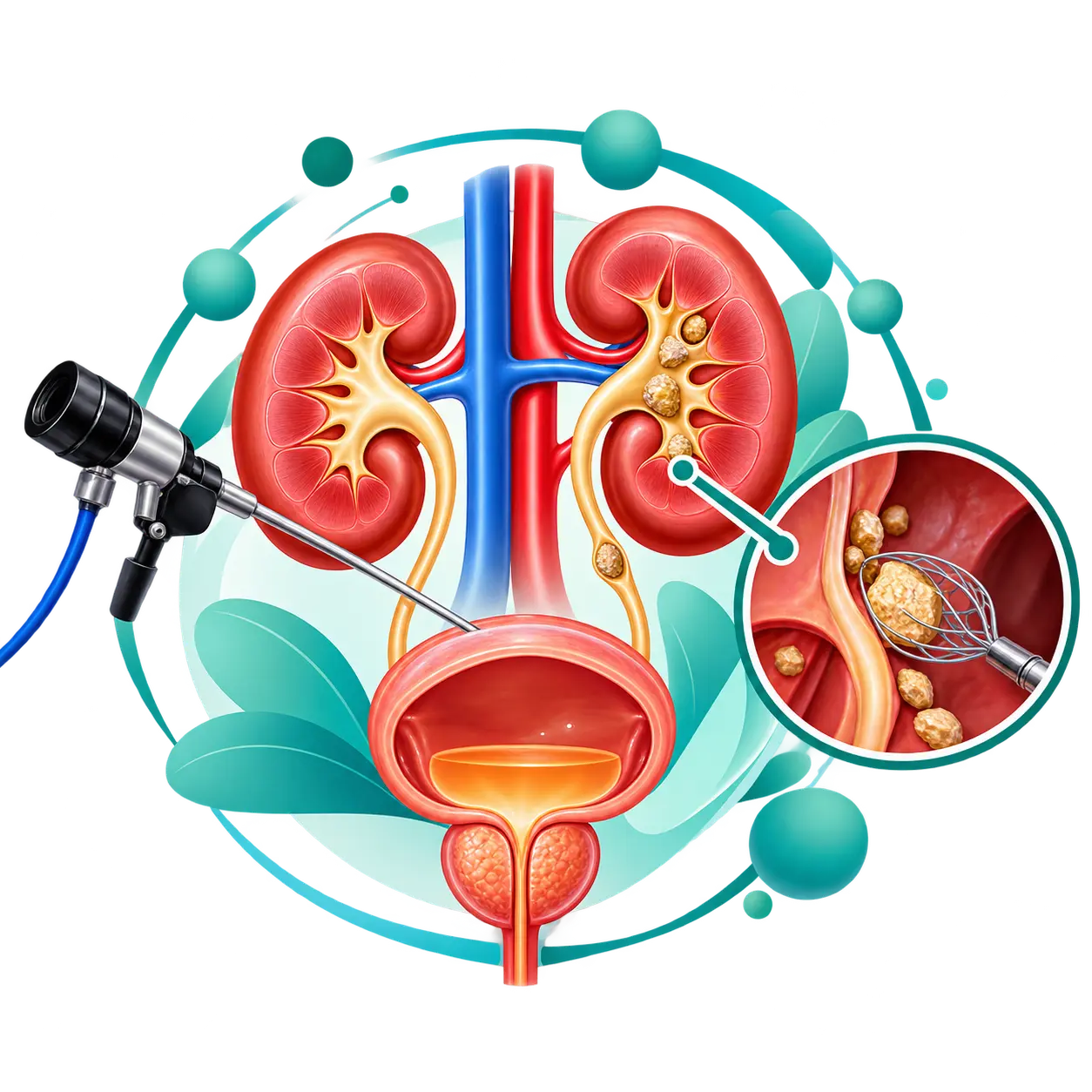
Most kidney stones and an enlarged prostate are treated endoscopically, through the urine passage, rather than laparoscopically. See kidney stone treatment and prostate treatment for those options.
Laparoscopic vs Open Surgery
Both approaches do the same work inside the body. The main difference is how the surgeon reaches the organ.
Factor
Incision
Pain after surgery
Hospital stay
Return to daily activity
Scarring
Suitability
Laparoscopic Surgery
Three to five small cuts
Usually less
Often 2 to 4 days
Usually sooner
Small scars
Depends on anatomy, past surgery, and fitness
Open Surgery
One longer cut on the side or abdomen
Usually more in the first few days
Often longer
Usually slower
One larger scar
Possible in most situations, including very complex cases
These are general patterns, not promises. Recovery depends on the operation, your age, your general health, and how the surgery goes. Occasionally, the surgeon switches to open surgery during the operation because it is safer at that point. This is a sensible safety decision, not a failure of the procedure.
Is Laparoscopic Surgery Suitable for Everyone?
No. Many patients are good candidates, but some are not. The following can make laparoscopy harder or less safe:
- Several previous abdominal operations with heavy internal scarring
- Serious heart or lung disease that makes abdominal gas risky
- Uncontrolled bleeding disorders
- Some very large or complex tumours
At your consultation, Dr. Kallol reviews your scans, medical history, and fitness reports. He then explains which approach he recommends and why. If open surgery is the safer option for you, he will say so plainly.
Before, During, and After Your Operation
Consultation and tests
Your ultrasound, CT urogram, or renogram is reviewed along with blood and urine tests. Further tests are arranged only if needed.
Fitness check
The anaesthesia team assesses your heart, lungs, and other health conditions. Blood thinners and diabetes medicines may need adjusting before surgery.
Surgery day
The operation is done under general anaesthesia. Most laparoscopic kidney operations take about two to four hours.
Hospital stay
You are encouraged to sit up and walk within a day if possible. A urinary catheter and a drain may stay in for a short time.
Discharge and follow-up
You receive instructions on wound care, medicines, and activity. A follow-up visit checks healing, and stent removal is booked when needed.
Recovery After Laparoscopic Urology Surgery
Recovery depends on the procedure and your overall health. The table shows what many patients experience after a standard laparoscopic kidney operation.
Time After Surgery
First 24 to 48 hours
Day 2 to 4
Week 1 to 2
Week 4 to 6
What to Expect
Sitting up, short walks, and starting fluids and light food. Mild shoulder-tip pain from the gas is common and settles on its own.
Most patients are ready to go home.
Light daily activity and desk work are often possible.
Heavy lifting and strenuous exercise are usually avoided until about this point.
Possible Risks of Laparoscopic Surgery
Every operation carries some risk, and laparoscopic surgery is no exception. Knowing the risks helps you make an informed choice.
Possible complications include bleeding, wound or urinary infection, injury to nearby organs such as the bowel or blood vessels, urine leakage at a repair site, blood clots, and conversion to open surgery. Most are uncommon, and the surgical team takes specific steps to reduce them.
Dr. Kallol explains the risks of your particular procedure before you sign consent, so you can ask questions and decide with clear information.
Cost of Laparoscopic Urology Surgery in Bangladesh
There is no single fixed price, because the total depends on several factors:
- The type of operation and how complex it is
- The hospital and the room category you choose
- How long you stay in hospital
- Tests needed before surgery
- Stents, disposable instruments, and medicines
- Any additional care needed after the operation
Once your reports are reviewed, the hospital can give you an estimate for your specific procedure. Ask what the estimate includes, so there are no surprises later.
The Experience Behind Your Surgery
Dr. Kallol came to laparoscopic urology through general surgery. He earned his FCPS in Surgery in 2015, then completed an MS in Urology at the National Institute of Kidney Diseases & Urology (NIKDU) in 2019.
He then worked as a urologist at Dhaka Medical College Hospital and Kurmitola General Hospital, two of the busiest public hospitals in Bangladesh. Across his career, he has independently performed more than 1,000 laparoscopic and endoscopic urological procedures.
He is a member of the Bangladesh Society of Endo-Laparoscopic Surgeons and the American Urological Association. You can read more about his training and professional experience.
He also publishes recorded operations on his YouTube channel, including a laparoscopic right radical nephrectomy and a post-hysterectomy fistula repair. These give patients and families an honest look at how the surgery is actually done.
Frequently Asked Questions
Is laparoscopic surgery the same as keyhole surgery?
Yes. Both terms describe surgery through small cuts using a camera and long, thin instruments. “Minimally invasive surgery” is a broader term that also includes endoscopic procedures done through the urine passage.
What is the difference between laparoscopic and endoscopic urology surgery?
Laparoscopic surgery reaches organs through small cuts in the abdomen or side. Endoscopic surgery goes through the urethra and leaves no skin cut. Endoscopic methods are used for most kidney stones, prostate enlargement, and bladder tumours.
How long does laparoscopic kidney surgery take?
Most laparoscopic kidney operations take about two to four hours. Previous surgery, internal scarring, or a complex tumour can make the procedure longer.
How many days will I stay in hospital?
Many patients go home within two to four days. The exact stay depends on the procedure, how you recover, and whether a drain or catheter is still needed.
How successful is laparoscopic pyeloplasty?
Published studies report that the obstruction is relieved in more than 90 percent of patients after laparoscopic pyeloplasty. Your own outcome depends on how much kidney function remains and on your anatomy, which is checked before surgery.
Can I live a normal life with one kidney after nephrectomy?
Yes. Most people live a normal, active life with one healthy kidney. Yearly checks of blood pressure, urine protein, and kidney function are advised, and painkillers should be taken only on medical advice.
Will I need a DJ stent after laparoscopic surgery?
A stent is usually placed after pyeloplasty or ureter repair and removed after about four to six weeks. It is not usually needed after a simple nephrectomy or adrenalectomy.
When can I return to work after laparoscopic urology surgery?
Many people return to desk work in one to two weeks. Jobs involving heavy lifting or hard physical work usually need four to six weeks. Your surgeon will advise based on your recovery.
How much does laparoscopic pyeloplasty cost in Bangladesh?
The cost varies with the hospital, room category, length of stay, tests, and stent. After your reports are reviewed, the hospital can provide an estimate for your case.
How do I know whether I need laparoscopic or open surgery?
The decision depends on your diagnosis, scans, previous operations, and overall fitness. Dr. Kallol explains the recommended approach and the reasons for it at your consultation.
Book a Consultation for Laparoscopic Surgery
If a scan has shown a blocked kidney, a non-working kidney, or an adrenal tumour, a specialist review helps you understand your options before any decision is made.
Please bring your ultrasound, CT scan, renogram, blood test reports, and current prescriptions to your appointment.