Kidney Stone Treatment in Dhaka
Laser and keyhole options for stones in the kidney, ureter, and bladder, matched to the size and position of your stone.
Not every stone needs an operation. Dr. Humayun Kabir Kallol, a Consultant and experienced Urologist in Dhaka at Continental Hospital PLC, Gulshan-2, first assesses whether your stone is likely to pass naturally, can be managed with medication, or requires removal.
- MBBS
- FCPS (Surgery)
- MS (Urology)
BM&DC Reg. No. A-45623
 Posted on Google

 Apu Mojumder
Trustindex verifies that the original source of the review is Google.
🙏 শ্রদ্ধা ও কৃতজ্ঞতা, হুমায়ুন কবির কল্লোল স্যার। ফেনীতে আমার মায়ের একটি অপারেশন করা হয়েছিল। দুর্ভাগ্যবশত, সেই অপারেশনের পর জটিলতা দেখা দেয়। এতে আমরা পুরো পরিবার দুশ্চিন্তায় পড়ে যাই। পরবর্তীতে একজনের মাধ্যমে শ্রদ্ধেয় হুমায়ুন কবির কল্লোল স্যারের কথা জানতে পারি। খোঁজ নিয়ে জানতে পারি, স্যার কুর্মিটোলা জেনারেল হাসপাতালে চিকিৎসাসেবা দেন। এরপর মাকে সেখানে ভর্তি করাই। স্যার নিজেই মায়ের অপারেশন করেন। তাঁর চিকিৎসায় মা সুস্থ হয়ে ওঠেন। আমাদের কঠিন সময়ে স্যারের চিকিৎসা ও সহযোগিতার জন্য আমরা আন্তরিকভাবে কৃতজ্ঞ। স্যারের প্রতি রইল গভীর শ্রদ্ধা ও ভালোবাসা। আমাদের দৃষ্টিতে, স্যার বাংলাদেশের একজন অত্যন্ত দক্ষ ও গুণী চিকিৎসক। সৃষ্টিকর্তার কাছে প্রার্থনা করি, স্যার যেন সুস্থ থাকেন এবং দীর্ঘদিন মানুষের সেবায় নিজেকে নিয়োজিত রাখতে পারেন। 🙏Posted on Google Jannatul Ferdous"Highly recommend Dr. HUMAYUN KABIR KALLOL 'He is an exceptionally skilled surgeon with a very caring attitude. My Surgery went smoothly, and the post-surgery care was excellent. Thank you, Doctor!"Posted on Google
 Md Hasibul hasanআমাদের অপারেশনটি অত্যন্ত সুন্দর ও সফলভাবে সম্পন্ন করার জন্য সম্মানিত ইউরোলজি বিশেষজ্ঞ ডা. মোঃ হুমায়ুন কবির কল্লোল স্যার-এর প্রতি আন্তরিক কৃতজ্ঞতা ও অসংখ্য ধন্যবাদ। অপারেশনের আগে থেকে শুরু করে পুরো চিকিৎসা প্রক্রিয়ায় স্যারের দক্ষতা, আন্তরিকতা, যত্নশীল আচরণ এবং রোগীর প্রতি দায়িত্বশীলতা আমাদের সত্যিই মুগ্ধ করেছে। প্রতিটি বিষয় অত্যন্ত সুন্দরভাবে বুঝিয়ে দেওয়া এবং আত্মবিশ্বাস ও সাহস জোগানোর জন্য আমরা তাঁর প্রতি বিশেষভাবে কৃতজ্ঞ। অপারেশনটি অত্যন্ত দক্ষতার সঙ্গে সম্পন্ন করার পাশাপাশি তাঁর আন্তরিক ব্যবহার ও মানবিক আচরণ আমাদের মনে গভীরভাবে দাগ কেটেছে। একজন চিকিৎসকের কাছ থেকে যে আন্তরিকতা, যত্ন ও পেশাদারিত্ব প্রত্যাশা করি, আমরা তা তাঁর কাছ থেকে পেয়েছি। ডা. মোঃ হুমায়ুন কবির কল্লোল স্যার-এর প্রতি রইল আমাদের আন্তরিক শ্রদ্ধা, কৃতজ্ঞতা ও শুভকামনা। মহান আল্লাহ তাঁকে সুস্থ ও দীর্ঘায়ু করুন এবং ভবিষ্যতে আরও অসংখ্য মানুষের সেবা করার তৌফিক দান করুন। অসংখ্য ধন্যবাদ ও আন্তরিক কৃতজ্ঞতা। ❤️Posted on Google
 Hazrat Miahthanks for dr. service
How are Kidney Stones Treated?
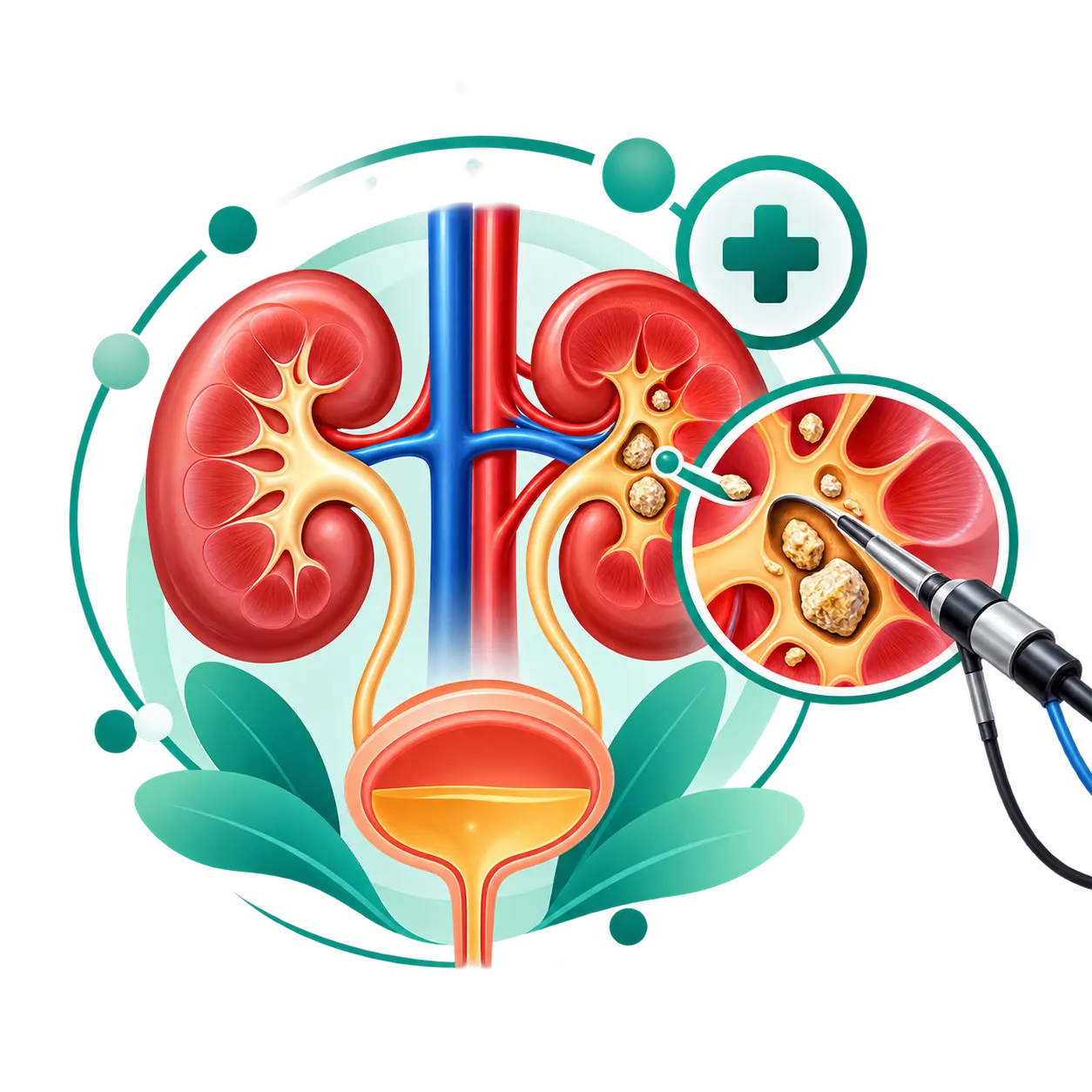
Small stones, usually under 5 mm, often pass on their own with fluids, pain relief, and sometimes a medicine that relaxes the ureter. Larger or stuck stones are removed. The main options are RIRS (a flexible laser telescope), PCNL (keyhole surgery through the back), ureteroscopy for ureter stones, and shock wave lithotripsy for some small kidney stones.
Does Every Kidney Stone Need Surgery?
No. A stone found by chance on an ultrasound, causing no pain or blockage, can often be watched with regular scans.
A small stone that has moved into the ureter may pass within a few weeks. Doctors usually support this with pain relief, plenty of fluid, and, for stones near the bladder, an alpha blocker that helps the ureter relax.
Surgery becomes the better choice when:
- The stone is too large to pass, usually above 5 to 10 mm depending on its position
- Pain keeps coming back or cannot be controlled with medicine
- The stone blocks urine flow and the kidney starts to swell
- Infection keeps returning because of the stone
- The stone has not moved after a reasonable waiting period
- You have only one working kidney, or stones in both kidneys
Your job, travel plans, and how much the pain affects daily life also matter. These are part of the conversation, not an afterthought.
When a Stone Becomes an Emergency
Go to an emergency department straight away if you have a stone and:
- Fever, shivering, or chills
- Pain that painkillers do not control
- Repeated vomiting and cannot keep fluids down
- Very little or no urine
A blocked kidney with infection can become serious quickly. The first step is usually to drain the kidney with a stent or a thin tube through the back. The stone itself is treated a little later, once the infection has settled.
Why Stone Size and Position Decide the Treatment
Two stones of the same size can need different treatment. Position, hardness, the shape of your kidney, and your general health all count.
The table shows the usual starting points used in international guidance. Your own plan may differ after your CT scan is reviewed.
Stone
Kidney stone under 5 mm, no symptoms
Ureter stone under 10 mm
Kidney stone 5 to 20 mm
Kidney stone over 20 mm, or staghorn stone
Ureter stone that will not pass
Bladder stone
Common Options
Watchful waiting with follow-up scans
Trial of passage with pain relief and an alpha blocker, if no infection or severe blockage
RIRS or shock wave lithotripsy (ESWL). PCNL for some lower kidney or hard stones
PCNL is usually the first choice
Ureteroscopy (URS) with laser
Endoscopic removal through the urethra, plus treatment of the cause
Kidney Stone Treatment Options Dr. Kallol Offers
01
RIRS: Laser Surgery Without a Cut
RIRS stands for retrograde intrarenal surgery. A thin, flexible telescope passes up through the urine passage, through the bladder and ureter, and into the kidney.
A holmium laser then breaks the stone into fine dust or small pieces. There is no cut on the skin. Many patients go home the next day.
Sometimes the ureter is too narrow for the telescope on the first attempt. In that case, a stent is placed and the procedure is completed about two weeks later, once the ureter has widened. It is better to know this possibility in advance.
02
PCNL: Keyhole Surgery for Large Stones
PCNL means percutaneous nephrolithotomy. The surgeon makes a small opening, about 1 cm, in the back and creates a direct track into the kidney.
Large stones are broken and removed through this track, often in a single session. PCNL clears large and staghorn stones more reliably than other methods. The hospital stay is usually two to three days.
03
Ureteroscopy for Ureteric Stones
When a stone is stuck in the ureter, the tube between the kidney and bladder, a slim telescope is passed up to reach it. The stone is broken with a laser or removed whole with a small basket.
This is often the quickest way to relieve severe pain from a stone that refuses to move.
04
Bladder Stones
Bladder stones are treated through the urethra, without a cut. In men, they are often linked to an enlarged prostate that stops the bladder from emptying fully.
Removing the stone alone is rarely enough in that case. The prostate is assessed as well, and you can read about the options on our prostate treatment page.
A Note on Shock Wave Lithotripsy (ESWL)
ESWL breaks stones with sound waves from outside the body. It suits some smaller kidney stones, but works less well for hard stones, stones in the lower part of the kidney, or in people with a larger body size.
If ESWL is a sensible option for your stone, Dr. Kallol will discuss it with you alongside the endoscopic choices.
Very rarely, a kidney has been so damaged by long-standing stones that it no longer works. Removing it by laparoscopic surgery may then be advised, but only after a kidney function scan confirms this.
RIRS vs PCNL: How They Compare
These are the two treatments patients ask about most. Neither is better in every case. Each suits a different kind of stone.
Route
Skin cut
Best suited to
Hospital stay
Chance of a second session
Stent afterwards
RIRS
Through the urine passage
None
Stones up to about 2 cm
Often one night
Higher for larger stones
Often placed for a short time
PCNL
Small opening in the back
About 1 cm
Stones over 2 cm and staghorn stones
Usually two to three days
Lower for large stones
Sometimes, or a small drainage tube
Living With a DJ Stent
A DJ stent is a soft, thin tube that sits inside the ureter, with one curled end in the kidney and the other in the bladder. It keeps urine draining while swelling settles after surgery.
While it is in, you may notice:
- A frequent or urgent need to pass urine
- Some blood in the urine, especially after activity
- A mild ache in the side when passing urine
These are common and usually settle once the stent is removed. Removal is a short procedure, often without a general anaesthetic.
Recovery After Kidney Stone Surgery
After RIRS or ureteroscopy, most people return to light work within a few days. Some discomfort while the stent is in place is normal.
After PCNL, expect a slightly longer recovery. Many people return to desk work in one to two weeks and avoid heavy lifting for about four weeks.
A follow-up scan, usually a few weeks later, checks whether any fragments remain. Small fragments often pass in the urine. Larger ones may need attention.
Kidney Stone Operation Cost in Bangladesh
Patients understandably want a number before deciding. The honest answer is that the cost depends on your stone and the method used, so two people can receive very different estimates.
The main factors are:
- The procedure. RIRS uses a flexible telescope and laser fibre, which add to the cost. PCNL and ureteroscopy have different equipment needs.
- Stone size and number. Larger or multiple stones may need more time or a second session.
- Hospital and room category.
- Length of stay and tests before and after surgery.
- Stent placement and removal, if needed.
Once your CT scan is reviewed and a method is agreed, the hospital can give you a written estimate. Ask whether it includes stent removal and follow-up scans.
Keeping Stones From Coming Back
Removing a stone treats the problem you have today. It does not stop the next one from forming. Many people who have had one stone will form another within several years.
A few habits make a real difference. NICE guidance for adults recommends:
- Drinking 2.5 to 3 litres of water a day, and more in hot weather or after heavy sweating
- Adding fresh lemon juice to water, which can help prevent some stone types
- Keeping salt to no more than 6 g a day
- Eating a normal amount of calcium, rather than cutting it out
- Avoiding fizzy drinks
Long working hours in Dhaka’s heat, with little water, are a common pattern among people who form stones. Keeping a water bottle at hand is a simple habit worth building.
Your Stone Specialist
Dr. Kallol trained in urology at the National Institute of Kidney Diseases & Urology (NIKDU), Dhaka, and later worked as a urologist at Dhaka Medical College Hospital. Stone disease made up a large share of the cases he managed in these busy public hospitals.
He performs RIRS, PCNL, and endoscopic stone surgery as part of more than 1,000 laparoscopic and endoscopic procedures he has carried out independently. As a kidney stone specialist in Dhaka, his aim is to clear your stone with the least invasive method that will work for you.
You can read more about his qualifications and experience.
Frequently Asked Questions
What size kidney stone needs surgery?
Stones under 5 mm often pass on their own. Stones over 10 mm rarely pass and usually need treatment. Between 5 and 10 mm, the decision depends on position, symptoms, and whether the kidney is blocked.
Which is better for kidney stones, RIRS or PCNL?
Neither is better for everyone. RIRS suits most stones up to about 2 cm and needs no cut. PCNL is usually preferred for stones over 2 cm or staghorn stones, because it clears large stones more completely.
Can kidney stones be removed without surgery?
Small stones can pass naturally with fluids, pain relief, and sometimes an alpha blocker. Some stones can be broken with shock wave lithotripsy from outside the body. No medicine reliably dissolves the most common calcium stones.
Is laser kidney stone surgery painful?
RIRS is done under anaesthesia, so you feel nothing during the procedure. Afterwards, mild discomfort and a frequent urge to pass urine are common, mostly because of the stent.
How long does it take to recover from kidney stone surgery?
Most people return to light activity within a few days after RIRS or ureteroscopy. After PCNL, recovery usually takes one to two weeks for desk work and about four weeks before heavy lifting.
When is the DJ stent removed after stone surgery?
It is usually removed between one and four weeks after surgery, depending on the procedure. Your surgeon will give you a date. Do not leave a stent in longer than advised.
How much does a kidney stone operation cost in Bangladesh?
The cost depends on the method, stone size, hospital, room category, and length of stay. After your CT scan is reviewed, the hospital can give you a written estimate for your specific case.
Can kidney stones come back after treatment?
Yes. Stones often recur, which is why prevention matters. Drinking 2.5 to 3 litres of water a day, limiting salt, and having stone analysis if stones keep returning all help lower the risk.
Is it safe to wait if my stone is not causing pain?
Often, yes, for small stones with regular scans. A stone that blocks the kidney can damage it without much pain, though, so follow-up imaging should not be skipped.
What tests do I need before kidney stone treatment?
A CT KUB scan is the most useful test. Urine tests check for infection, and blood tests check kidney function. Treatment is usually delayed until any infection is cleared.
Book a Kidney Stone Consultation
If you have had stone pain, or a scan has shown a stone, a review helps you decide whether to wait, take medicine, or remove it. Dr. Kallol explains each option in plain language, including the trade-offs.
Please bring your CT KUB or ultrasound report, the scan images if you have them, recent urine and creatinine results, and your current prescriptions.