Enlarged Prostate (BPH) Treatment and Surgery in Dhaka
Help for a weak stream, night-time urination, and the feeling that your bladder never fully empties.
Dr. Humayun Kabir Kallol, an experienced Urologist in Dhaka, provides prostate treatment at Continental Hospital PLC, Gulshan-2. Treatment options range from lifestyle changes and medication to TURP, TURIS, and HoLEP laser surgery when necessary.
- MBBS
- FCPS (Surgery)
- MS (Urology)
BM&DC Reg. No. A-45623
 Posted on Google

 Apu Mojumder
Trustindex verifies that the original source of the review is Google.
🙏 শ্রদ্ধা ও কৃতজ্ঞতা, হুমায়ুন কবির কল্লোল স্যার। ফেনীতে আমার মায়ের একটি অপারেশন করা হয়েছিল। দুর্ভাগ্যবশত, সেই অপারেশনের পর জটিলতা দেখা দেয়। এতে আমরা পুরো পরিবার দুশ্চিন্তায় পড়ে যাই। পরবর্তীতে একজনের মাধ্যমে শ্রদ্ধেয় হুমায়ুন কবির কল্লোল স্যারের কথা জানতে পারি। খোঁজ নিয়ে জানতে পারি, স্যার কুর্মিটোলা জেনারেল হাসপাতালে চিকিৎসাসেবা দেন। এরপর মাকে সেখানে ভর্তি করাই। স্যার নিজেই মায়ের অপারেশন করেন। তাঁর চিকিৎসায় মা সুস্থ হয়ে ওঠেন। আমাদের কঠিন সময়ে স্যারের চিকিৎসা ও সহযোগিতার জন্য আমরা আন্তরিকভাবে কৃতজ্ঞ। স্যারের প্রতি রইল গভীর শ্রদ্ধা ও ভালোবাসা। আমাদের দৃষ্টিতে, স্যার বাংলাদেশের একজন অত্যন্ত দক্ষ ও গুণী চিকিৎসক। সৃষ্টিকর্তার কাছে প্রার্থনা করি, স্যার যেন সুস্থ থাকেন এবং দীর্ঘদিন মানুষের সেবায় নিজেকে নিয়োজিত রাখতে পারেন। 🙏Posted on Google Jannatul Ferdous"Highly recommend Dr. HUMAYUN KABIR KALLOL 'He is an exceptionally skilled surgeon with a very caring attitude. My Surgery went smoothly, and the post-surgery care was excellent. Thank you, Doctor!"Posted on Google
 Md Hasibul hasanআমাদের অপারেশনটি অত্যন্ত সুন্দর ও সফলভাবে সম্পন্ন করার জন্য সম্মানিত ইউরোলজি বিশেষজ্ঞ ডা. মোঃ হুমায়ুন কবির কল্লোল স্যার-এর প্রতি আন্তরিক কৃতজ্ঞতা ও অসংখ্য ধন্যবাদ। অপারেশনের আগে থেকে শুরু করে পুরো চিকিৎসা প্রক্রিয়ায় স্যারের দক্ষতা, আন্তরিকতা, যত্নশীল আচরণ এবং রোগীর প্রতি দায়িত্বশীলতা আমাদের সত্যিই মুগ্ধ করেছে। প্রতিটি বিষয় অত্যন্ত সুন্দরভাবে বুঝিয়ে দেওয়া এবং আত্মবিশ্বাস ও সাহস জোগানোর জন্য আমরা তাঁর প্রতি বিশেষভাবে কৃতজ্ঞ। অপারেশনটি অত্যন্ত দক্ষতার সঙ্গে সম্পন্ন করার পাশাপাশি তাঁর আন্তরিক ব্যবহার ও মানবিক আচরণ আমাদের মনে গভীরভাবে দাগ কেটেছে। একজন চিকিৎসকের কাছ থেকে যে আন্তরিকতা, যত্ন ও পেশাদারিত্ব প্রত্যাশা করি, আমরা তা তাঁর কাছ থেকে পেয়েছি। ডা. মোঃ হুমায়ুন কবির কল্লোল স্যার-এর প্রতি রইল আমাদের আন্তরিক শ্রদ্ধা, কৃতজ্ঞতা ও শুভকামনা। মহান আল্লাহ তাঁকে সুস্থ ও দীর্ঘায়ু করুন এবং ভবিষ্যতে আরও অসংখ্য মানুষের সেবা করার তৌফিক দান করুন। অসংখ্য ধন্যবাদ ও আন্তরিক কৃতজ্ঞতা। ❤️Posted on Google
 Hazrat Miahthanks for dr. service
What Is an Enlarged Prostate?
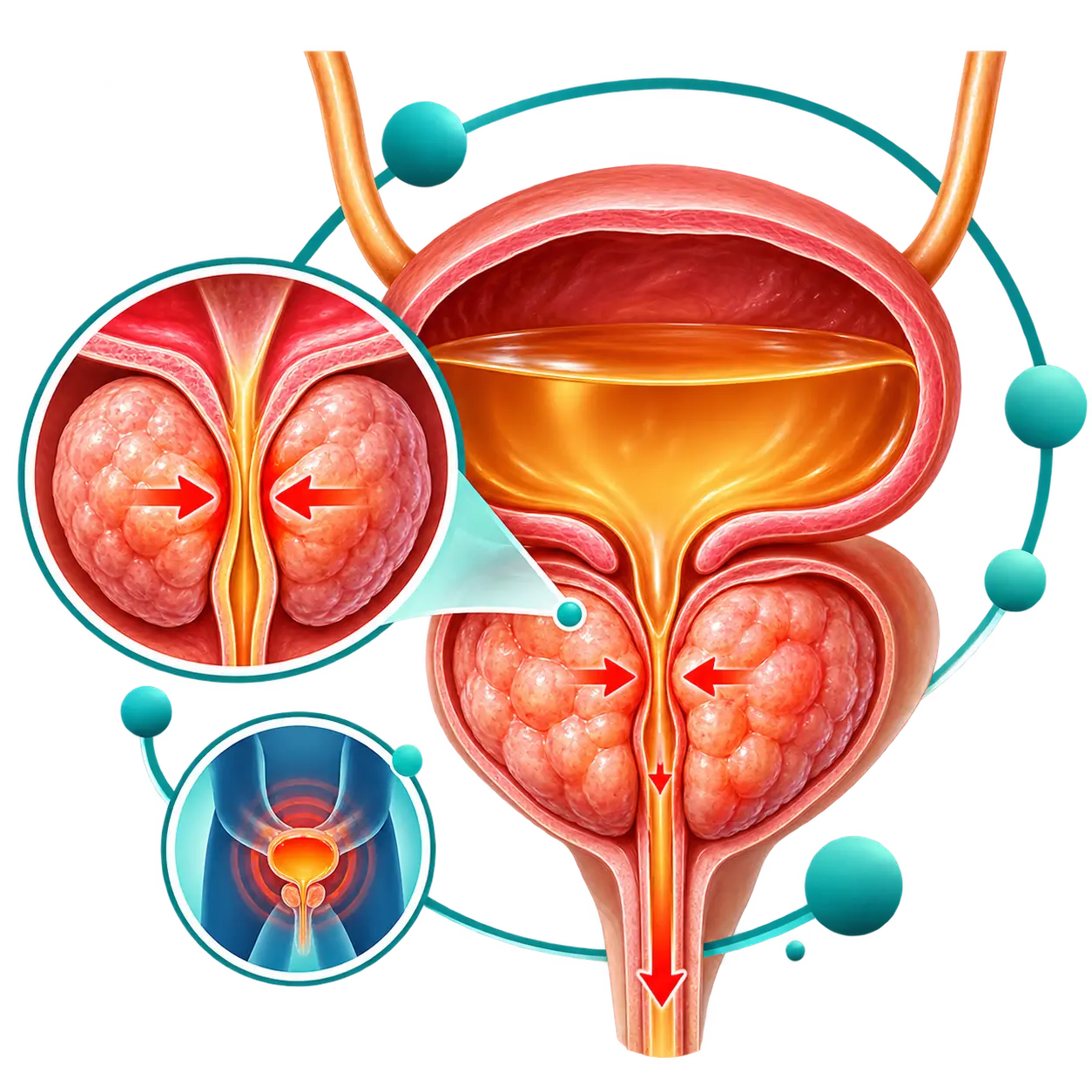
An enlarged prostate, or benign prostatic hyperplasia (BPH), is a non-cancerous growth of the prostate gland that happens with age. The prostate surrounds the urethra just below the bladder. As it grows, it can squeeze the urine channel and make passing urine slower and harder.
BPH is very common. Autopsy studies find it in about half of men in their 60s and in most men over 70. Many have mild symptoms that never need surgery.
Prostate size and symptoms do not always match. A modestly enlarged gland can cause real trouble, while some men with a large prostate notice very little.
Signs Your Prostate May Be Affecting Your Bladder
Symptoms usually build slowly, so many men put up with them for years. Common signs include:
- A weak or slow stream, or one that stops and starts
- Waiting a while before urine begins to flow
- Getting up two or more times a night to pass urine
- A sudden, hard-to-delay urge to go
- Dribbling at the end, or a feeling that the bladder is still full
These symptoms are not unique to BPH. A narrowed urethra, an overactive bladder, diabetes, or some medicines can cause similar problems. That is why a proper check matters before any treatment is chosen.
How Your Prostate Is Assessed
The first visit is about understanding what is causing your symptoms and how much they affect you. Most tests are quick and cause little or no discomfort.
Test
Symptom score (IPSS)
Urine test
Ultrasound with post-void residual
Uroflowmetry
Creatinine blood test
PSA blood test
Why It Is Done
A short questionnaire that measures how much your symptoms bother you
Checks for infection, blood, or sugar
Measures prostate size and how much urine stays behind after you pass urine
You pass urine into a machine that records the speed of your stream
Checks that the kidneys are not affected by back-pressure
Helps judge prostate size and whether further cancer checks are needed
An enlarged prostate is not cancer, and it does not turn into cancer. The two can exist at the same time, though, and both can raise PSA.
If your PSA or examination raises concern, Dr. Kallol will explain the next steps. Information on testing and treatment is on our urological cancer surgery page.
Treatment Options, Step by Step
Treatment usually follows a ladder. Most men start at the bottom, and many never need to climb higher.
01
Watchful Waiting and Daily Habits
If symptoms are mild and your tests are normal, small changes often help:
- Drink less in the two hours before bed, but keep your total daily fluid normal
- Cut down on tea, coffee, and alcohol, especially in the evening
- Wait a moment after passing urine and try again, called double voiding
- Check your medicines. Some cold and allergy tablets can make urine harder to pass
Your symptoms are then reviewed regularly, so nothing is missed if they worsen.
02
Medicines
Alpha blockers relax the muscle around the prostate and bladder neck. They often improve flow within days. Dizziness on standing and reduced semen at climax are possible side effects.
5-alpha reductase inhibitors shrink the prostate slowly. They work best in larger glands, and full benefit takes around six months. Some men notice reduced sex drive.
The two are sometimes combined for men with a large prostate and troublesome symptoms. Medicines control symptoms but do not remove the blockage, so they are usually taken long term.
03
Surgery
Surgery is advised when medicines no longer help, cause side effects you cannot accept, or when the prostate has started to cause harm. Clear reasons include:
- Urinary retention, where you suddenly or gradually cannot pass urine
- Repeated urinary infections
- Bladder stones caused by incomplete emptying
- Back-pressure affecting the kidneys
- Repeated bleeding from the prostate that medicine does not control
If you have a bladder stone, it is usually removed during the same operation. You can read more on our kidney stone treatment page.
Prostate Surgery Options: TURP, TURIS, and HoLEP
All three operations are done through the urethra. There is no cut on the skin. A telescope reaches the prostate from inside, and the tissue blocking the urine channel is removed.
TURP (Transurethral Resection of the Prostate)
TURP has been the standard operation for BPH for decades, with a long record of good results. An electric loop shaves away the obstructing tissue in small pieces.
It suits small to medium prostates well. Very large glands are harder to treat completely with TURP.
TURIS (Bipolar TURP)
TURIS works in the same way, but uses bipolar energy in a saltwater solution. This lowers the risk of TUR syndrome, a rare problem caused by fluid absorption during longer operations.
For many patients, TURIS has become the preferred form of TURP.
HoLEP (Holmium Laser Enucleation of the Prostate)
HoLEP uses a holmium laser to peel the enlarged inner part of the prostate away from its outer shell, much like removing an orange from its peel. The freed tissue is pushed into the bladder, broken up, and removed.
Because it removes the whole obstructing part, HoLEP works for prostates of almost any size, including very large ones. Bleeding is usually low, and the catheter often comes out sooner than after TURP.
HoLEP vs TURP: Which Is Right for You?
There is no single answer. The choice depends mainly on your prostate size, your general health, and whether you take blood thinners.
Prostate size
Bleeding
Catheter time
Hospital stay
Chance of repeat surgery
Reduced semen at climax
TURP / TURIS
Small to medium
Low to moderate
Usually 2 to 3 days
Usually 2 to 3 days
Low
Common
HoLEP
Any size, including very large
Usually low
Often about 1 day
Often 1 to 2 days
Lower over the long term
Common
Will Prostate Surgery Affect My Sex Life?
This is one of the most common worries, and it deserves a straight answer.
Ejaculation
After TURP, TURIS, or HoLEP, most men notice little or no semen at climax. The semen flows back into the bladder instead, called retrograde ejaculation. It is harmless, and the feeling of orgasm usually stays the same.
Erections
These are usually not affected by the operation itself. A small number of men notice a change, often linked to age, diabetes, or heart disease rather than the surgery.
Urine control
Some urgency or leakage in the first weeks is common while the bladder adjusts. Long-term leakage is uncommon.
Recovery After Prostate Surgery
In hospital
A catheter drains the bladder for one to three days. You go home once you pass urine well without it.
First two weeks
Some burning and frequency are normal. Drink plenty of water and avoid straining on the toilet.
Around weeks two to three
A little blood in the urine can return as healing scabs come away. Extra fluid usually clears it.
Four to six weeks
Avoid heavy lifting, long motorbike or cycle rides, and strenuous exercise until about this point.
Prostate Operation Cost in Bangladesh
The cost of prostate surgery varies, so a figure quoted without seeing your reports is rarely accurate. The main factors are:
- The operation chosen, since HoLEP uses laser equipment and fibres
- The size of your prostate and the operating time needed
- The hospital and room category
- How long you stay and how long the catheter is needed
- Tests before surgery and the tissue examination afterwards
After your assessment, the hospital can give you a written estimate. It helps to ask whether it covers the tissue report and follow-up visits.
Choosing a Prostate Specialist in Dhaka
Prostate symptoms are common, but the right treatment depends on careful assessment. A specialist who offers both medical care and several surgical options can match the treatment to you, rather than the other way round.
Dr. Kallol trained in general surgery before completing his MS in Urology at NIKDU. He later worked as a urologist at Dhaka Medical College Hospital and Kurmitola General Hospital, where prostate problems are among the most frequent reasons men need care.
He performs TURP, TURIS, and HoLEP, and recommends surgery only when the benefit is clear. Read more about his background and training.
Frequently Asked Questions
What are the symptoms of an enlarged prostate?
Common symptoms are a weak or interrupted stream, delay in starting, waking at night to urinate, sudden urgency, and a feeling that the bladder has not emptied. Symptoms usually develop slowly over months or years.
When does an enlarged prostate need surgery?
Surgery is advised when medicines no longer control symptoms, or when the prostate causes urinary retention, repeated infections, bladder stones, kidney problems, or repeated bleeding.
Which is better, HoLEP or TURP?
Both work well. TURP suits small to medium prostates. HoLEP suits any size, usually means less bleeding and a shorter catheter time, and has a lower long-term chance of repeat surgery. The choice depends on your prostate and health.
Can an enlarged prostate be treated without surgery?
Yes, for many men. Lifestyle changes and medicines such as alpha blockers and 5-alpha reductase inhibitors control symptoms well in mild to moderate BPH. Regular review checks that the bladder and kidneys stay healthy.
How long is recovery after prostate surgery?
Most men go home within one to three days. Light activity is usually fine within one to two weeks, while heavy lifting and strenuous exercise are avoided for about four to six weeks.
Does prostate surgery cause erectile dysfunction?
TURP, TURIS, and HoLEP usually do not affect erections. Most men do notice little or no semen at climax afterwards, which is harmless but reduces natural fertility.
Is an enlarged prostate a sign of prostate cancer?
No. BPH is a non-cancerous condition and does not turn into cancer. Both can occur together, though, so a PSA test and examination are part of the assessment.
Can I take prostate medicine for life?
Many men do take it long term with good results. If symptoms worsen, side effects become a problem, or complications appear, surgery may become the better option.
How much does a prostate operation cost in Bangladesh?
The cost depends on the procedure, prostate size, hospital, room category, and length of stay. After your tests are reviewed, the hospital can provide a written estimate for your case.
What should I do if I suddenly cannot pass urine?
Go to a hospital emergency department promptly. Acute urinary retention needs a catheter to relieve the bladder. Treatment for the prostate is planned afterwards.
Book a Prostate Consultation
If night-time trips to the toilet or a weak stream are affecting your sleep or work, it is worth having it checked. A clear assessment often brings relief, sometimes without any operation.
Please bring any ultrasound reports, PSA and creatinine results, previous prescriptions, and a list of the medicines you take now.